

Xenoverse origins / R-084
Ivy VayneOrigin story
Ivy Vayne and the Garden That Packed Its Bags
A feeder determined to preserve her immaculate garden discovers that its carnivorous inhabitants are migrating and must decide what she is actually trying to keep.
Read the origin ↓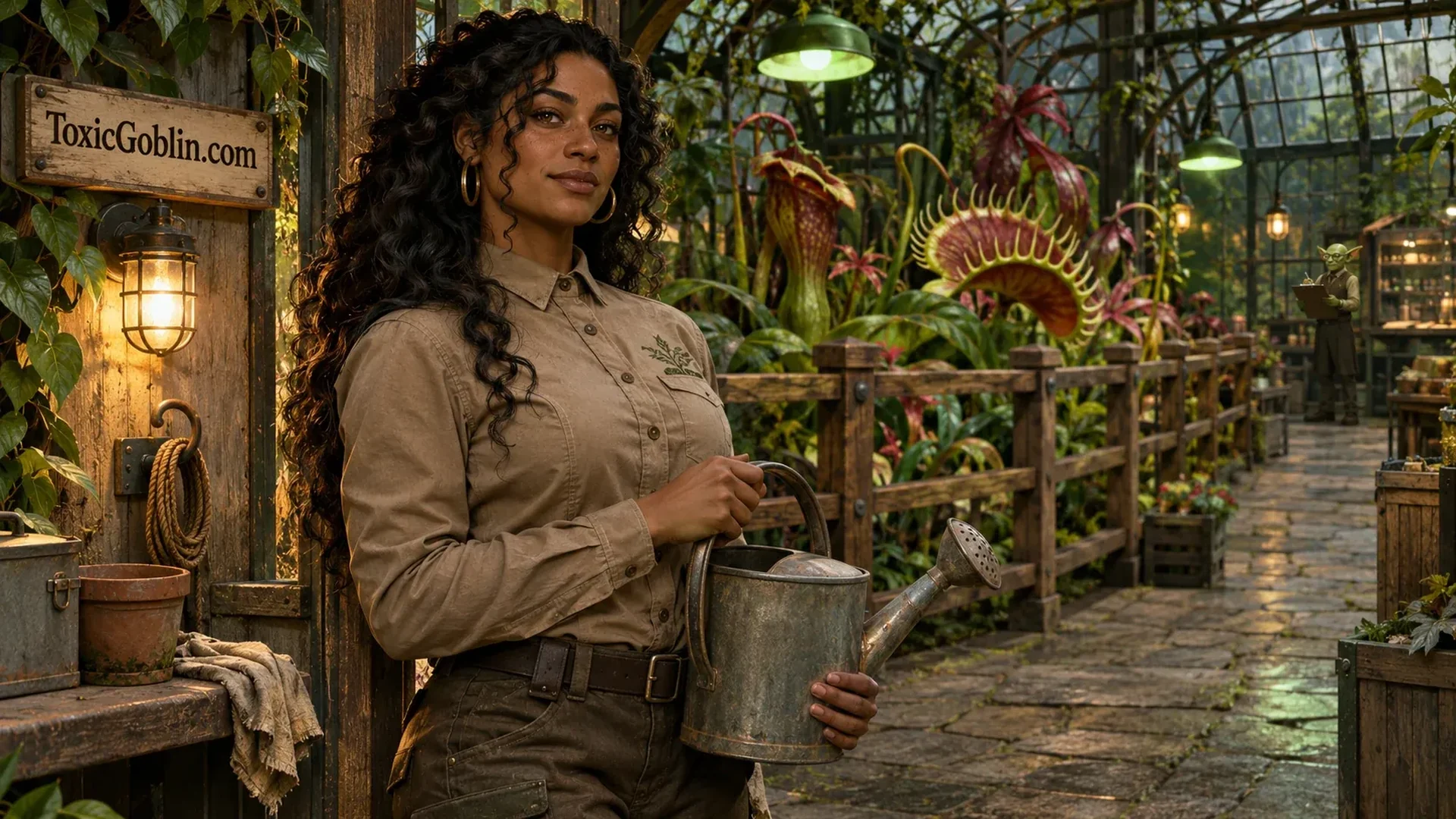
Someone had stolen Ivy Vayne's feeding cart. Whoever it was had also folded the watering canopy, uprooted the sign, and arranged seventeen pots in a line facing the gate. Ivy blamed the night shift until she found the cart beneath a giant leaf, packed with soil and apparently waiting for transport.
Ivy Vayne's inspection-ready collection chooses migration over display, forcing her to rethink what a successful garden looks like.
You cannot call it flourishing just because it stays where you put it.
From the dossier
Prologue — An Arrangement Worth Defending
Ivy had spent months making the Jungle outpost's botanical enclosure presentable. As Carnivorous Plant Feeder, she was responsible for appetites that came with hinges, tendrils, and occasional disagreements about which side of the fence counted as dinner.
She knew every specimen's preferences. The red lantern plant accepted its prepared ration only after sunset. The broad green pitcher sulked if its bowl touched another bowl. A squat specimen near the drain spat out anything served on a plate bearing a crown.
The Goblin Council considered this last habit insubordination. Ivy considered it useful information about plate storage.
Councillor Vell had inspected her work before. He remembered her because she had made him wait while a feeding round finished. She remembered him because he had tried to classify waiting as something he should invoice her for.
Now he was returning to award the enclosure a Permanent Excellence pennant. Ivy wanted it badly enough to overlook the ridiculous name. Her collection had survived neglect, bad deliveries, and the Council's brief enthusiasm for indoor weather. She wanted somebody to acknowledge what she had built.
She aligned the pots, trimmed the empty pathways, and changed the feeding order so the largest specimens would face the inspection balcony.
By dawn, every pot had turned away.
Across the gate, a thick root had tied a knot around the latch. The garden appeared to have locked itself in while planning to leave.
Act 1
Evidence of Poor Manners
Act I — Evidence of Poor Manners
Ivy restored the display before breakfast. She rolled the pots back, recovered the sign, and returned the feeding cart to its shed. A small snapping plant followed her and placed a seedpod on her boot.
She put it back in its pot.
It retrieved the pod and followed her again.
Ivy had no time for whatever game it had invented. Vell's advance clerk was already measuring space for the pennant. The clerk asked whether the path could be made straighter. Ivy told him he was welcome to negotiate with the tree at the bend.
When she returned from the stores, the pots stood in line once more. The large pitcher had collected the smaller specimens inside its broad leaves. The canopy was rolled across the cart. Her boots were covered in seedpods.
She accused the night porter of moving things. He pointed to the feeding cart, which was slowly towing itself toward the gate.
They watched it for a while.
"Very ambitious theft," he said.
Ivy checked the greenhouse's enchanted season wheel. It showed the dry quarter approaching, although the surrounding jungle remained wet. The wheel had been installed to keep the enclosure predictable. Her new inspection arrangement had exposed its face to the rising sun for the first time in months.
The plants believed their home was about to become unsuitable.
Ivy turned the wheel back. The cart stopped. She breathed out.
Then the enormous root beneath the path moved.
Her collection had already sent its message into the ground. Something far larger than seventeen pots was answering. Beyond the fence, trees parted around a dark shape with leaves as broad as the enclosure roof.
Act 2
The Mother at the Gate
Act II — The Mother at the Gate
The shape settled beyond the fence: a vast walking thicket carrying empty hollows among its branches. Ivy had read about nursery groves that collected migrating plants. She had never expected one to arrive at a Council installation, particularly on inspection day.
Its central blossom opened. Inside lay a nest of soil, old leaves, and places exactly the right size for her specimens.
Vell arrived while Ivy was still staring. He ordered the gate closed.

"It is closed," she said.
"Close it officially."
The clerk tied a red ribbon across the latch. The nursery grove plucked it free and tucked it into its branches.
Ivy tried offering the plants their favorite rations. They accepted the food, packed it, and resumed waiting. She tried restoring the old arrangement. The little snapping plant brought her another seedpod, patiently repeating information she had refused to understand.
They were not merely fleeing an incorrect season. They were ready to disperse. Her enclosure had done its job. The living things inside it had reached a point her display plan had not allowed.
Vell suggested binding the pots to the balcony. The collection had been budgeted as permanent, and a permanent collection could not simply wander off with an unregistered relative.
For one miserable moment, Ivy considered it. She could correct the season wheel, restore the display, collect the pennant, and call the stalled migration a successful intervention.
The feeding cart bumped her knee. The smallest plant climbed onto it carrying its seedpod like luggage.
Ivy looked at the spotless pathway she had cleared for people who had never fed anything here.
"You cannot call it flourishing just because it stays where you put it."
Vell asked whether that was directed at him.
"It is directed at me."
She took the gate key from her pocket and set it on the cart.
Act 3
An Empty Space with Roots
Act III — An Empty Space with Roots
Opening the gate was easier than moving the collection through it. Ivy's beautifully narrow path had been designed for visitors, not a broad pitcher transporting six other plants. The pots jammed at the bend. The nursery grove waited outside, making the fence creak with its patience.
Ivy fetched the ceremonial plaque intended for the pennant and used it to bridge a broken section of paving. Vell objected to the treatment of Council property. She asked whether he preferred the plants carry it away.
The clerk helped push the cart. He had been measuring pathways all morning and had useful opinions about the turn. Ivy listened. The little snapping plant rode at the front, its seedpod finally secure.
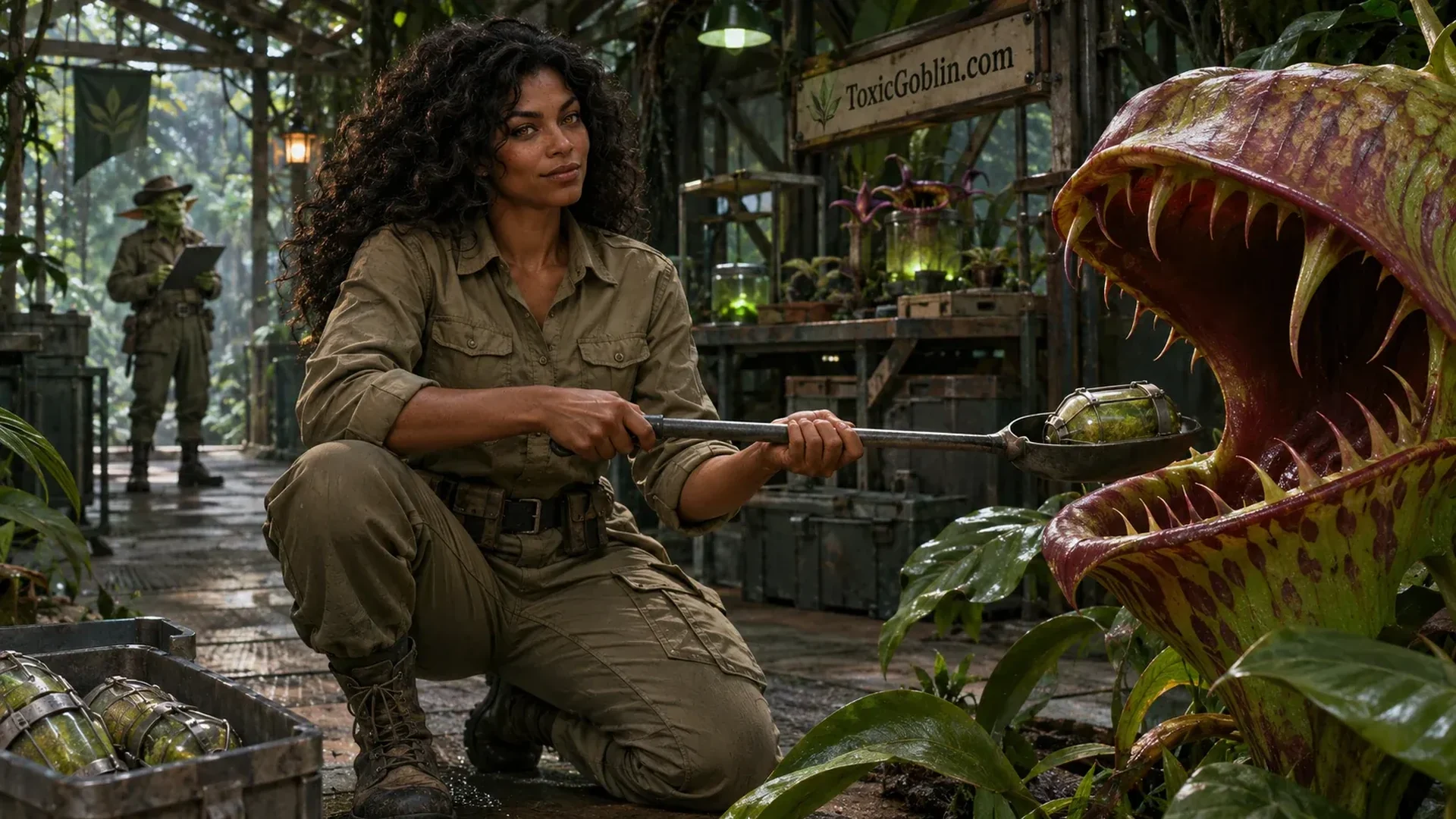
One by one, the specimens transferred into the nursery grove's hollows. Leaves closed around them. The giant creature shifted its roots, lifted the canopy Ivy had spent so long repairing, and withdrew into the jungle.
The enclosure looked terrible.
Empty pots lay on their sides. The path was broken. The inspection balcony faced a collection of holes. Vell rolled the pennant under his arm and announced that permanence had been gravely overstated.
Ivy let him leave with it.
She did not feel noble. She felt robbed, relieved, and annoyed that doing the right thing had produced so much additional cleaning. The night porter brought two chairs. They ate their delayed meal among the abandoned pots.
Under the cart, Ivy found a row of small seedpods. The snapping plant had not been asking her to pack them. It had been leaving them.
She wrote a new enclosure plan with wider paths and space marked deliberately empty. The Council rejected the empty space as an insufficiently described asset. Ivy submitted it again as ROOM TO GROW, which made the clerk laugh and Vell request a cost estimate.
At dusk, the ground beneath the distant Council guesthouse lifted by a finger's breadth. A green shoot emerged through the dining-room floor carrying a red ribbon.
The clerk came running for Ivy.
She put down her new plan, fetched the feeding cart, and asked how firmly the guesthouse had been classified as permanent.
Feeding a collection that will not stay put
The Jungle outpost's botanical enclosure houses invented carnivorous species with particular appetites and independent behavior. Ivy's work joins routine feeding to the harder question of whether the Council can own a living arrangement forever.