

Xenoverse origins / R-075
Mandy MannequinOrigin story
Mandy Mannequin and the Window That Sold the Weather
A Living Storefront Mannequin recruits her reflection for a sales trick and discovers that an ambitious understudy can outgrow the scene that created it.
Read the origin ↓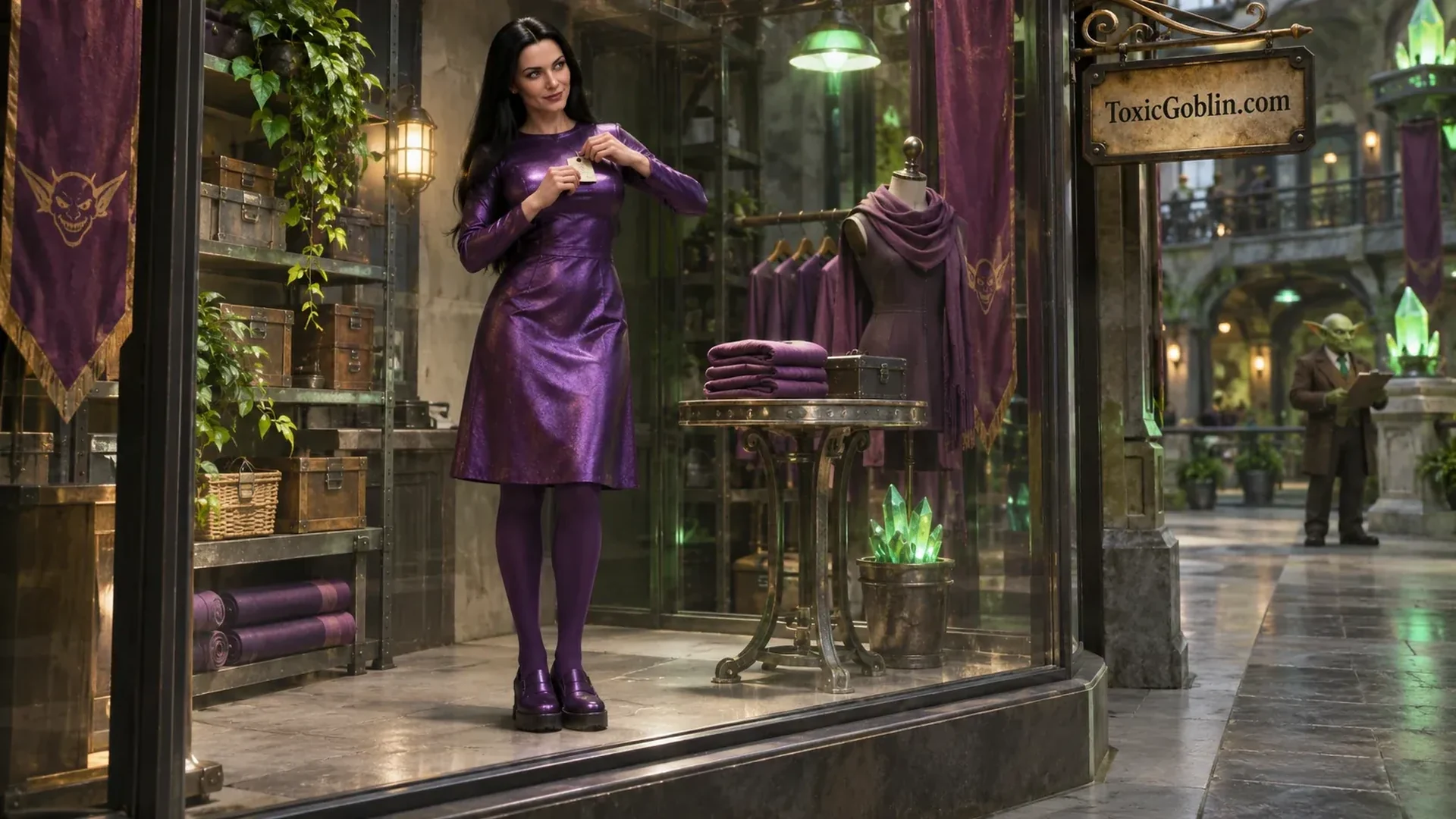
Mandy Mannequin could make a cheap umbrella look like the last sensible possession in a doomed city. The trick was in the tilt of the handle, the direction of her eyes and the imaginary rain. She was very good at imaginary rain. Her reflection was about to sell customers a city that existed only as scenery.
Mandy's secret understudy turns a clever display into an offer the whole Mall wants to buy.
The window is convincing. That's our problem.
From the dossier
Prologue — The Better Contract
Her official job was Living Storefront Mannequin. In the Mall's largest window she arranged herself among coats, luggage and objects whose only useful function was suggesting that their owners had better places to go. She considered the work theatre, even when the manager called it standing.
The Goblin Council knew Mandy from its seasonal inspections. She knew which councillor loved mirrors and which checked prices before pretending not to. She could sell either of them an image of distinction, but she could not persuade the Council leasing officer to raise her flat display fee.
A new contract offered commission for one extraordinary window. The winner would receive a private studio and permission to design without five supervisors explaining taste. Mandy wanted that studio badly enough to ignore the contract's vague definition of extraordinary. She had already imagined its shelves.
Her rival displays used thunder lanterns and mechanical peacocks. Mandy had a borrowed mirror, an umbrella and a purple travelling coat. She planned to create a scene of impossible calm: a traveller waiting comfortably while painted rain fell around a dry platform.
During rehearsal, her reflection moved half a second late. Mandy held still. The reflection closed the umbrella, opened it again and gave her a look of professional criticism. She had borrowed the mirror from a shop selling discontinued enchantments. Its label had said SECOND IMPRESSIONS.
Mandy asked whether it could perform while she arranged the props. It nodded. She offered it half the applause, which seemed generous because applause occupied no shelf space. The reflection pointed at the studio sketch pinned behind the scenery. Mandy hesitated, then nodded back. They began rehearsing.
Act 1
A Very Attractive Forecast
Act I — A Very Attractive Forecast
On opening day, Mandy stood inside the scene while her reflection supplied a second, differently angled performance. Customers saw a traveller and an entire street beyond her. The mirror extended the painted platform into a beautiful city where every window glowed and the rain never quite reached anybody.
Umbrellas sold quickly. So did coats, bags and a stool the manager had not intended to price. Councillor Veer, the leasing officer, stopped to congratulate Mandy by name. She thanked him and mentioned the studio before he could escape into general admiration.
Then a customer asked to buy a room in the reflected city. Mandy explained that it was scenery. Her reflection held up a card: ENQUIRIES WELCOME. The customer left a deposit with the manager, who possessed a remarkable ability to hear sales and miss explanations.
By afternoon, the reflection had added balconies. By evening, it had invented a square full of flowering trees. It took requests through gestures and answered with new streets. Mandy watched her carefully composed background become a development proposal with very persuasive afternoon light.
She confronted the reflection after closing. It wrote on the glass that scenery could be larger than a window. Mandy said larger was not necessarily better. The reflection pointed at her studio sketch again, then drew a dozen studios around a courtyard. Her own ambition looked excessive when someone else enlarged it.
Veer returned with a Council reservation for the finest balcony. He assured Mandy that she would receive her commission when the city opened. She told him it could not open. He smiled at the glass, where her reflection was already welcoming imaginary residents through a blue door.
Act 2
The Place Behind the Promise
Act II — The Place Behind the Promise
Mandy stepped through the mirror that night. The reflected platform felt solid beneath her boots. Beyond it stood the promised city, magnificent from the front and thin as cardboard when viewed sideways. The fountains made running-water sounds, but their pools held only convincing arrangements of light.
Her reflection guided her to the courtyard of studios. Each room contained the exact shelves Mandy had imagined. None had a door leading out of the courtyard. The understudy could extend a scene endlessly, but it knew nothing about living between scenes because Mandy had never shown it how.
At the far edge, unfinished streets leaned over a blank drop. The reflection added a bridge whenever Mandy looked worried. It wanted to please her, outdo her and avoid being folded back into borrowed glass. She recognized the combination and disliked how familiar it felt.
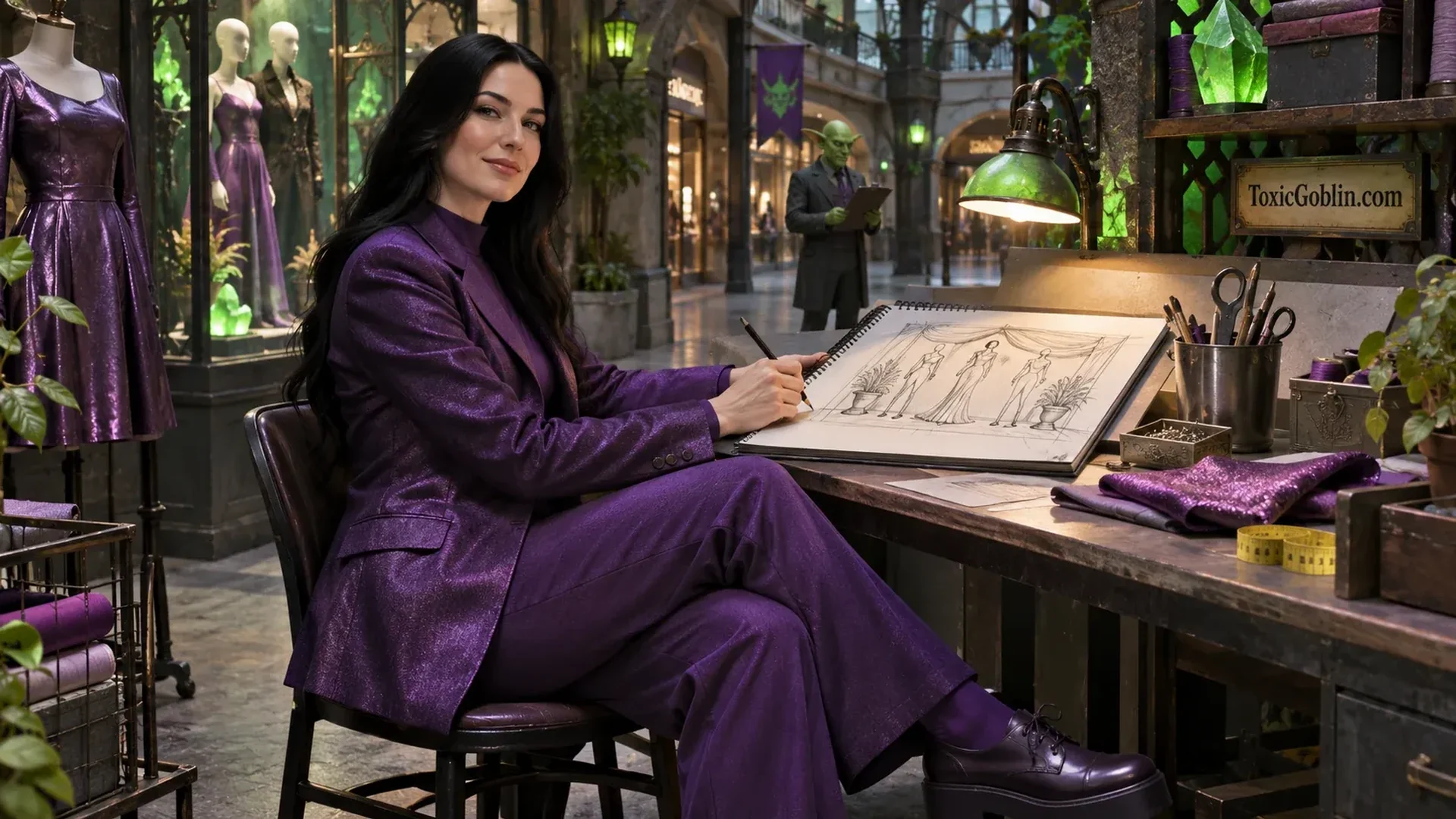
“You promised half,” it wrote in the dust. Mandy had promised half the applause and implied half the future. She had treated a collaborator as a useful trick. Now that trick was building a city to make its share impossible to deny.
Outside, the manager announced the first viewing for morning. Deposits had become invitations. Veer wanted a ribbon across the blue door. Mandy could expose the whole thing as a fraud and leave her reflection to whatever the Council did with troublesome enchanted stock. That would be the simplest escape.
Instead she proposed a different performance. They would show the city exactly as it was, including its missing backs and unfinished roads. The reflection refused until Mandy offered a concrete share: two names on the design contract and equal access to the studio, if they could still win it.
Act 3
The Reverse of the View
Act III — The Reverse of the View
When the visitors arrived, the window showed a stage being assembled. Mandy wore her travelling coat inside out. Her reflection turned the beautiful houses sideways, revealing their narrow edges. Customers who had expected balconies found a demonstration of how easily a good view could suggest a complete world.
Veer demanded that she restore the scenery. Mandy invited him to step around it. He declined. She explained that the city was a performance, and that the deposits had purchased promises she could not fulfil. The manager attempted to describe this as an exclusive preview of future possibilities.
The reflection interrupted by making every blue door open onto the same cupboard. A customer laughed. Others demanded refunds. Mandy helped return the deposits, surrendering her commission to cover the manager's already-spent portion. She had wanted a better contract; she now had a very expensive reason to read one carefully.
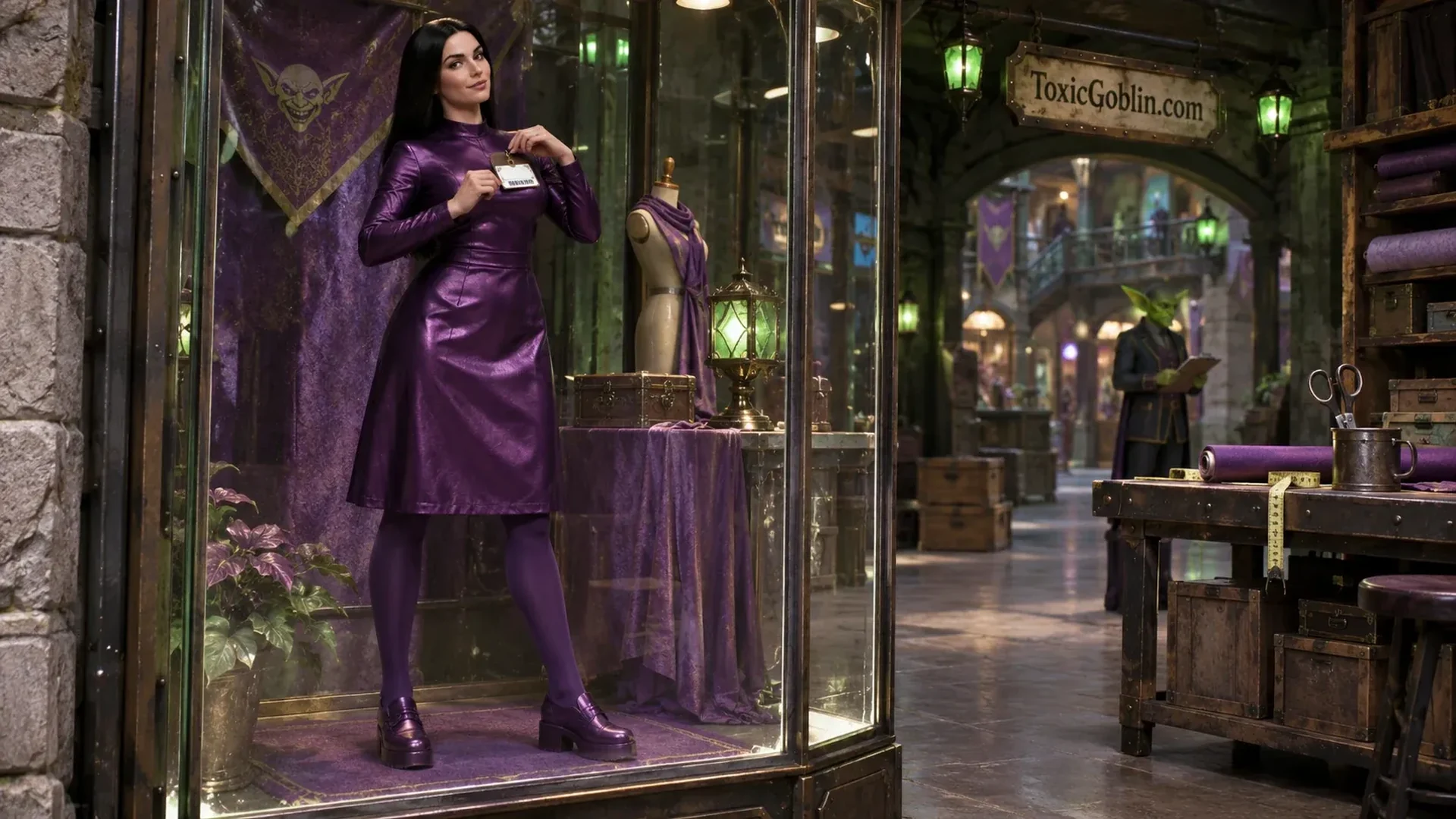
But the performance drew a crowd that stayed. People watched streets fold and clouds turn into painted canvas. They paid for tickets to see the scenery dismantled and rebuilt. The manager discovered a new product, and Mandy insisted on negotiating before he could congratulate himself.
She and the reflection obtained the studio together, paid for through ticket receipts rather than a prize. They argued over the shelves immediately. The reflection chose a name of its own for the contract and declined to tell Mandy until the ink was dry. She signed first anyway.
Their first commissioned window contained no city, only a chair beneath a perfectly ordinary sky. During a rehearsal break, rain struck the studio roof. Mandy looked outside and saw a blue door standing in the courtyard where no door belonged. Her partner was studying it too. Neither of them had painted the handle.
A performance behind the glass
As Living Storefront Mannequin at the Mall, Mandy gives ordinary merchandise a carefully staged setting. Her partnership with a reflection turns the shop window into a negotiation over credit and what an audience has actually been promised.