

Xenoverse origins / R-055
Barbie BarrelsOrigin story
Barbie Barrels and the Fastest Way to Lose
An Arena Barrel Retrieval Assistant chasing a solo speed record must choose between finishing first and admitting that her shortcut has blocked the entire event.
Read the origin ↓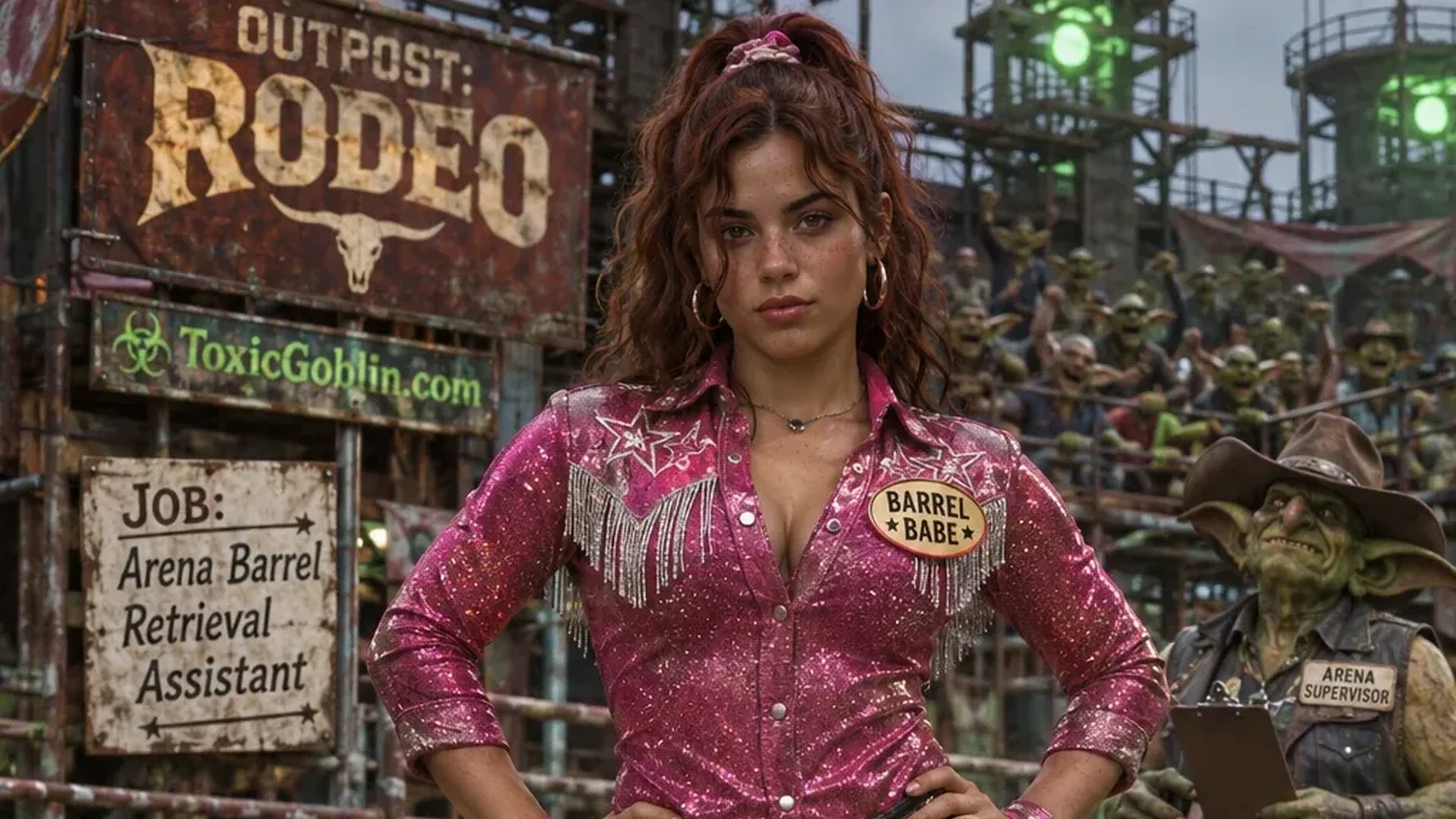
Barbie Barrels wanted a record with her name on it. She had considered the wall of disciplinary notices, but felt she could do better.
Barbie's attempt to earn a solo record makes the entire arena wait for her shortcut.
The Rodeo's annual clearing trial offered a silver buckle, a place in the programme and an opportunity to make a bad decision in front of paying spectators.
If you need six people to witness it, stop calling it a solo job.
From the dossier
Prologue — An Assistant with Ambitions
Barbie worked as Arena Barrel Retrieval Assistant at the Rodeo. After the riders completed their course, she returned the barrels to storage, recovered the markers and removed whatever the audience had decided the arena could keep. She knew the ground's dips better than most competitors. Unlike them, she crossed it after everyone else had finished damaging it.
The Goblin Council knew her name because she had asked three times for the retrieval crew to appear in the printed programme. The first request had been ignored. The second had received a spelling correction. The third had produced a line beneath the sponsors, in letters small enough to require optimism.
Barbie knew the Council remembered winners. She intended to become one at a task it normally stopped watching.
The clearing trial was meant to compare crew routines. Barbie turned it into a challenge. She announced that she could clear the entire course alone before the ordinary team completed its route.
Her rival, a goblin assistant called Prong, asked whether this included opening the storage gate, stacking the barrels and returning the cart.
“Obviously.”
“Then I'll have a sandwich ready.”
Barbie disliked him most when he sounded helpful.
She borrowed a narrow ceremonial cart from the display shed. Its polished wheels looked fast. Its high frame could carry more barrels than the battered work carts. A little plaque explained that it had once transported a Council trophy, which Barbie interpreted as proof of quality.
Prong examined the frame. “That thing is built to arrive impressively.”
“So am I.”
He looked at the storage passage, then back at the cart, and decided to save his answer.
Barbie drew her proposed route in the dirt. One sweeping circuit, one load, one triumphant arrival. She omitted the moments between those things because they made the diagram less elegant.
Act 1
The Impressive Arrival
Act I — The Impressive Arrival
The trial began with a whistle and a small argument over who had authorized the whistle. Barbie was already moving. She tilted the first barrel onto the cart, collected the second and swung around the third before the ordinary team reached the far rail.
The audience noticed.
She heard her name from the announcer's stand, pronounced correctly for once. She added a little flourish while securing the next barrel. It cost her several seconds, but she considered them an investment.
Prong's team worked in pairs. One fetched; one stacked. They moved steadily and without any visible interest in her performance. This seemed rude.
Barbie loaded the last arena barrel and headed for the storage passage. Her cart rattled. The pile swayed. She pictured the buckle before she pictured the doorway.
The ceremonial frame did not fit.
She stopped with the leading wheel wedged between two posts. Behind her, the loaded barrels leaned forward. Ahead, the storage clerk lifted his pen and waited for the situation to develop into something he could refuse.
Barbie tried turning the cart. Its rear swung across the riders' exit. A mounted official had to back away. The audience cheered, assuming this was a new event.
Prong arrived with a single barrel. He waited politely behind her.
“Use the other gate,” Barbie said.
“That would be the one you've blocked from this side.”
She could unload, back out and begin again with a work cart. It would end the record attempt. It would also work.
Instead she noticed the ceremonial entrance on the opposite side of the arena. Wide doors. Level approach. An unobstructed route straight past the Council's seating box.
She reversed with great effort and wheeled toward it.
The announcer interpreted her change of course as a victory lap.
Barbie, already committed to being misunderstood in the most flattering way, raised one hand.
Then she saw the carpet laid across the entrance and remembered why the crew never used that route.
Act 2
A Carpet with Political Weight
Act II — A Carpet with Political Weight
The cart reached the carpet, dragged it forward and rolled its edge into a thick fold beneath the wheels. Barbie stopped again. The barrels shifted. One dropped from the top and rolled toward the Council box.
It came to rest against a councillor's footstool. No one was hurt. The councillor's expression suggested that this made the incident harder to explain as an attack.
Barbie held the cart steady while an usher retrieved the loose barrel. Spectators began offering advice from several incompatible directions. The announcer asked whether she wished to withdraw.
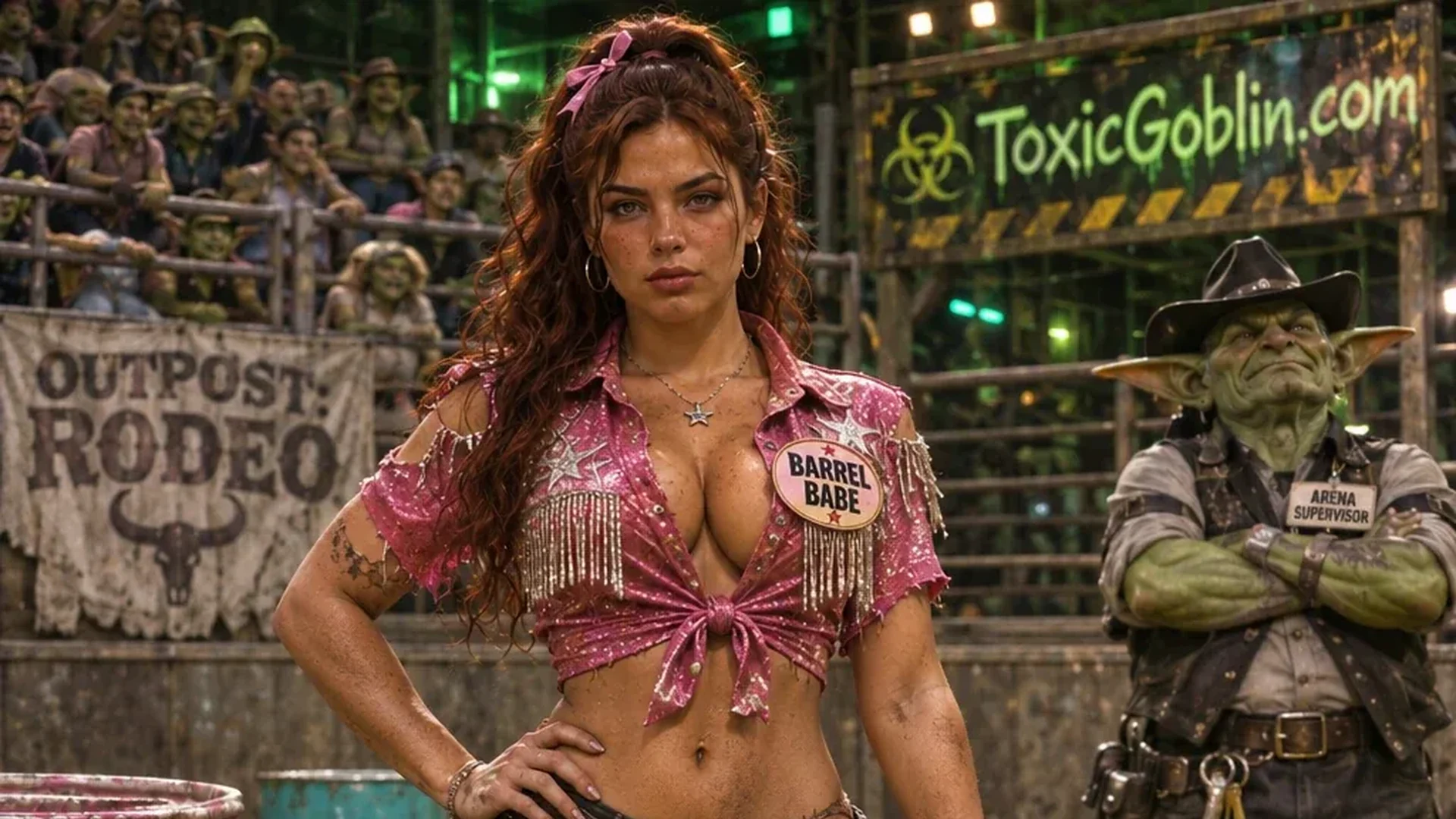
She said no too quickly.
The cart now blocked the ceremonial entrance, the carpet blocked its wheels and the ordinary retrieval team could not finish stacking because half the course equipment remained on her load. The competition had become a queue, with Barbie at the front of it insisting she was still racing.
Prong walked over without his sandwich.
He offered to help unload. She told him that would invalidate her solo time.
“It already includes an usher,” he said. “And a councillor's footstool.”
Barbie looked around. The storage clerk had left his desk to keep the passage clear. Two riders were waiting to move their equipment. An attendant held the loose barrel she had waved away. Her supposedly independent performance had recruited a substantial unpaid cast.
The councillor demanded that somebody remove the obstruction. Barbie recognized him from the programme committee. He recognized her too, and asked whether this was another request for prominent placement.
She almost gave him the answer the audience wanted. A sharp line would earn a laugh and postpone the harder sentence.
Instead she called the announcer over.
“Stop my clock.”
He asked whether she was conceding.
“Yes.”
The word travelled farther than she expected.
Prong rolled a work cart beside hers. Barbie asked the usher to set down the barrel, thanked the storage clerk for holding the passage and began handing the load across one piece at a time. The audience watched a job become a job again. Some looked disappointed. She found she could bear it.
Act 3
The Names Under the Score
Act III — The Names Under the Score
Once the barrels were off, the ceremonial cart became merely awkward. The crew moved it clear. The carpet was unrolled. The councillor recovered his footstool and requested that nobody mention its contribution to the result.
Barbie mentioned it to Prong anyway.
His team finished the route. Their time was poor because they had spent much of it waiting for her, but the trial official ruled that delays caused by another competitor did not erase their completion. They won the buckle.
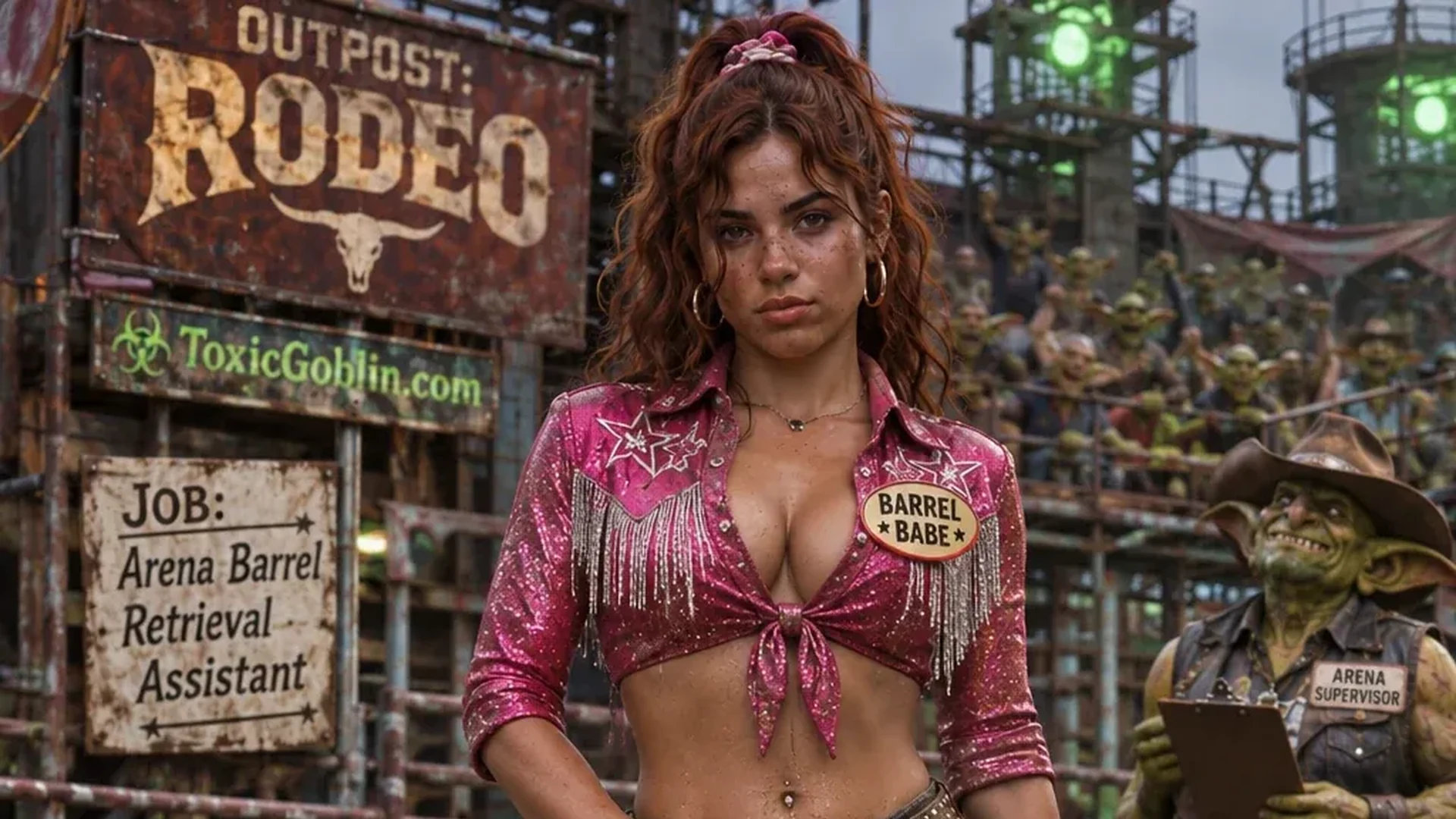
Prong accepted it with an expression so neutral Barbie suspected him of practising.
She expected a speech. Instead he asked whether she wanted half the sandwich. She did, which irritated her until she realized hunger had no interest in the scoreboard.
They ate on the storage steps while the audience moved toward the next event. Barbie studied the ceremonial cart. It had performed exactly the task it was designed for: being noticed. She had supplied the rest of the trouble herself.
The Council fined the department for the carpet. Barbie volunteered to cover it from her trial allowance. Prong objected when the official tried to add a charge for the councillor's emotional inconvenience. The fee was removed after a short discussion about whether the footstool had suffered independently.
Barbie laughed, then asked the programme clerk to print the winning crew's names at a readable size.
“Including yours?” he asked.
“No.”
That answer cost more than the carpet.
Before leaving, she helped Prong stack the last barrels. He showed her a route that looked slower from the arena but reached the storage space without a turn. She admitted it was better. He did not make her repeat the admission.
The announcer returned with a fresh programme proof. The Council had found the trial unexpectedly popular. Next month's event would feature rival retrieval teams, timed obstacles and reserved seating.
Across the proposed heading, in large letters, appeared BARBIE'S BARREL CHALLENGE.
She stared at it. She had finally become visible, in exactly the way she had wanted to avoid.
Prong read over her shoulder. “They'll need someone who knows where it goes wrong.”
Barbie looked from the proof to the cart, then to the broad, foolish route she had drawn in the dirt.
She took the pencil from the announcer. This time, before changing the course, she asked Prong to sit down beside her.
The work after the riders leave
Barrel retrieval links the public arena to the less glamorous storage passages. Barbie's clearing trial turns those practical routes into the action of the story, exposing how much invisible help a supposedly solo performance already needs.