

Xenoverse origins / R-069
Ruby RindsOrigin story
Ruby Rinds and the Price of Six Pairs
An Offal Sorting Specialist must route a fixed shipment of matched bellows sacs between two legitimate claims and accept the losses that careful sorting cannot prevent.
Read the origin ↓
Ruby Rinds had eight pairs on her bench and two orders for eight pairs. Both orders were genuine. Both carried the Goblin Council's seal. For a moment she considered sending the Council four pairs of its own clerks and calling the exchange fair.
Ruby has one fixed shipment, two valid claims and a sorting decision that cannot keep every service running.
Half a useful thing can be a whole useless thing.
From the dossier
Prologue — Two Claims on the Same Cart
The consignment was ordinary hollowhorn offal, packed in saltcloth: paired bellows sacs, each pair joined by a tough central seam. Whole pairs powered the enchanted paddles on the burial ferry. Cut into strips, the same membranes lined the Slaughterhouse's cold-room organ. Neither use required imagination. Both required stock.
Ruby worked as Offal Sorting Specialist, and she disliked leaving a dispute unfinished. Her bench had separate grooves for destination cards, so an item could belong somewhere before she even touched it. Workers trusted that tidy decisiveness. Ruby trusted it more than she should.
The Goblin Council knew her square stamp and her habit of returning ambiguous orders with the ambiguity circled. Councillor Nib usually answered with a larger signature. Today he arrived in person, bringing a ferry requisition and the confidence of someone who expected a physical presence to improve arithmetic.
Behind him came cold-room keeper Dross. The organ's membrane lining had split. Its low note was already rising; when it reached a whistle, the borrowed winter inside the chambers would escape. Stored goods would lose their last protection.
The ferry keeper arrived holding a brass departure bell. His passengers could board only before moonrise. Without fresh bellows pairs, the paddles could not push through the river's dead current. Missed passengers would wait on the landing, where their unfinished funeral songs kept the surrounding houses awake.
Nib laid the orders side by side. 'An equal division seems reasonable.' Ruby nearly stamped four pairs to each destination. It would have been a beautiful arrangement on the bench.
Act 1
The Numbers Inside the Wrapping
Act I — The Numbers Inside the Wrapping
The ferry keeper caught her wrist before the stamp landed. His paddles needed six complete pairs to work. Four would turn the wheels slowly enough for the river to turn them back. He had requested eight because the purchase office accepted standard bundles and disliked fractions of a bundle.
Dross could use any membrane still sound enough to cut. His eight-pair request covered all three cold chambers. He had not inflated it. One chamber held communal meal stock, one held independently rented trays, and one held the Council's elaborate banquet provisions.
'Half a useful thing can be a whole useless thing,' Ruby said. Nib looked disappointed that fairness required knowing what anything did.
She unwrapped every pair. Six were intact. Two had pinholes along one lobe, marked by salt darkening the cloth. They could not hold the ferry's enchanted breath, but broad sections could still be cut from their sound halves.
Ruby laid out a paper pattern for the cold-room lining. The two damaged pairs would furnish one chamber. Keeping all three cold would require cutting sound pairs as well. Even one such cut would leave fewer than the ferry's necessary six.
She tried fitting the pattern diagonally. She tried exchanging its curved pieces. She tried an arrangement so optimistic that Dross quietly placed his finger over the gaps. Ruby disliked him for it, briefly and without justification.
Outside, a tenant arrived for her rented tray. Her stall had closed while she came to collect it, and she wanted a storage refund. Ruby started to explain the sorting problem. The tenant asked whether an explanation would keep the tray cold on the journey home. Ruby stopped explaining.
Act 2
The Chamber She Could Keep
Act II — The Chamber She Could Keep
Nib offered a delay. They could place the entire consignment in the disputed rack until a second councillor ruled. The cold-room organ climbed another note. On the landing, a funeral chorus began rehearsing the first verse. There were many verses. The ferry keeper shut the window.
Ruby could cut everything and preserve the Slaughterhouse's stock. The ferry would miss its crossing, but nobody in the sorting room would have to watch the passengers wait. The ease of that distance troubled her more than Nib's suggestion.
She asked the keeper how many people depended on the crossing. He named the waiting households rather than a total. Dross named the tenants whose goods would spoil. Both lists were short enough to remember. Neither was short enough to dismiss.
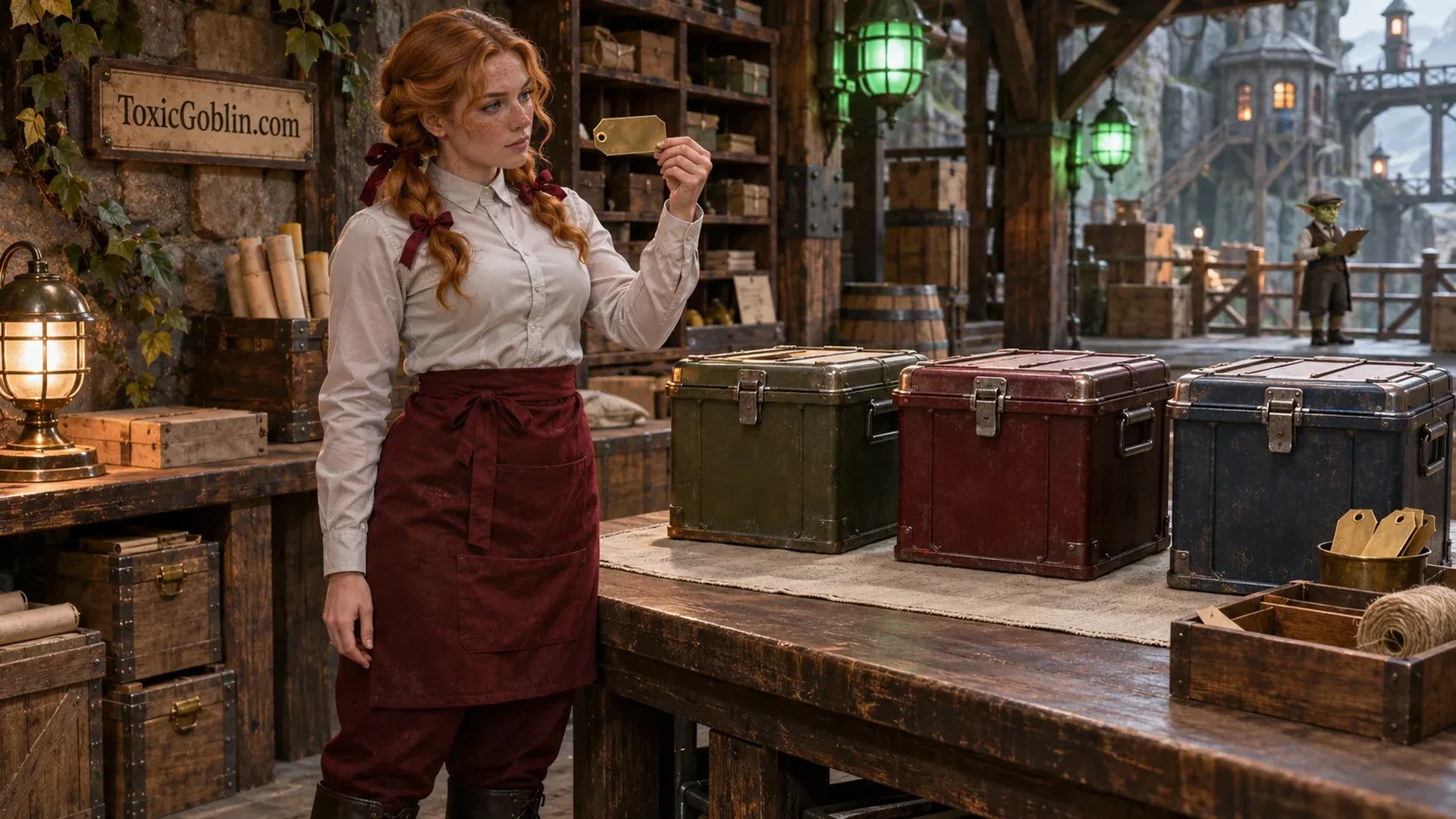
Ruby carried the two damaged pairs to the cutting table. Dross followed, expecting the communal chamber to be saved. Nib pointed instead toward the Council provisions. Their purchase price exceeded the contents of the other chambers combined.
The rented trays were valuable too, and their owners had paid for a service. Preserving them would protect wages and livelihoods. Saving the communal chamber would keep the next shift fed, including the people now carrying their trays away. Ruby could make a case for either. She could not make more lining.
Her usual answer would have been to keep the expensive goods and let a formula own the decision. This time she chose the communal chamber. She told Dross to open the other two for immediate collection. Anything unclaimed before the winter escaped would be lost.
The tenant with the tray swore at her. Ruby accepted the accusation without turning it into a lesson about difficult choices. She handed over her own insulated lunch carrier, which accommodated only a corner of the tray. The smallness of the help was embarrassing.
Nib refused to authorize the loss. Ruby invoked her station's existing routing authority, which allowed a destination decision but left its financial consequences with the sorter. He asked whether she understood the distinction. She fetched the silver fork he had once awarded her for decisive service and placed it against the loss bond.
It was insufficient. She signed away her next block of paid loading allowances as well. Nib did not become kinder. He took the fork to be weighed.
Act 3
A Clean Cut Leaves an Edge
Act III — A Clean Cut Leaves an Edge
Once Ruby cut the first damaged pair, the decision became something nobody could amend with a signature. She trimmed the sound sections to Dross's pattern. The ruined portions went into the rendering bin. Six intact pairs stayed wrapped for the ferry.
At the dispatch fork, Nib's courier pulled the trolley toward the cold rooms. His instruction still said ALL AVAILABLE MATERIAL. Ruby stood on the track lever and made him stop. She counted six pairs onto the ferry cart herself, checking the matching seams as the keeper secured them.
The organ reached a thin, painful note. Dross carried the new lining through the communal chamber door. Ruby could not follow: the Council courier was still waiting for her to move her foot.

From beyond the wall came the low note returning. Only one door rim gathered frost. Along the other two, the pale crust melted into threads of water. Workers carried out what they could. Banquet jellies lost their towers. A rented confection slumped in its box while its owner held it perfectly level.
The ferry bell sounded from the river. Its paddles struck six times, then continued. The chorus drew away across the water. Ruby heard the sudden quiet around the landing and kept her foot on the lever until the empty trolley was gone.
At closing, the loss sheet contained names she recognized. Her bond covered only part of it. Nib had recorded the ferry's successful departure in another department, so there was no convenient column in which the benefit cancelled the damage.
Ruby sorted the unclaimed contents of the failed chambers for disposal. Dross stayed to help, though neither found much to say. She had saved their next meal. That did not make the work before them less wasteful.
The ferry keeper returned her destination card. Six muddy fingerprints marked receipt. Beneath them he had written that the paddles would need replacements again after the next run. The Council, seeing a completed delivery, had cancelled the duplicate order.
Ruby pinned the card above her bench. Tomorrow she would have to persuade someone to buy another consignment while she was still paying for this one. Tonight, a tenant waited beside the door for her promised refund.
Ruby put down the ordinary fork she had borrowed from Dross and went to hear how much.
One consignment, incompatible needs
At the Slaughterhouse, whole bellows pairs and cut membranes serve different purposes. Ruby's sorting work becomes a routing decision when the burial ferry and the cold rooms claim the same stock, leaving her responsible for losses that an equal split would only worsen.