

Xenoverse origins / R-052
Wendy WhirlOrigin story
Wendy Whirl and the Courtesy Spin
A Wheel of Misfortune Demonstrator quietly fixes the outcomes to avoid awkward scenes until the deferred consequences threaten an entire audience.
Read the origin ↓
Wendy Whirl had made the Wheel of Misfortune reliable. This was excellent for repeat business and unfortunate for the wheel.
A performer who quietly controls every result must face an audience whose risks she has chosen for them.
By the time it objected, she had a full audience and no result prepared for herself.
You bought a spin, not my permission to blame the wheel.
From the dossier
Prologue — The Gentle Click
At the Freak Show, Wendy worked as Wheel of Misfortune Demonstrator. She announced the wedges, spun the wheel and explained consequences to people who had heard the explanation perfectly well before buying a turn. She could keep an audience laughing through almost anything except a silence she had not planned.
The Goblin Council knew her polished routine. She had hosted its delegation often enough to recognize which members enjoyed a joke and which merely waited for someone lower in rank to laugh first. They knew she would keep an evening comfortable. This was the reputation that trapped her.
The wheel's milder wedges required a ridiculous hat, a public apology or a shift carrying chairs. Its darker wedges took a thing the player had expected: a pleasant afternoon, an effortless victory, an invitation arriving at the right time. The losses were small individually, but nobody enjoyed watching a disappointed customer ask whether they could have their expectation back.
Wendy had fitted a little felt pad behind the pointer. With a pressure of her foot, she could guide it toward the hat. The trick was neither difficult nor dignified. It kept the laughter moving.
She told herself she was protecting people.
The evening's first player was a goblin messenger still wearing his work satchel. He asked for a genuine spin. Wendy assured him that all spins were genuine.
“Then let it land,” he said.
She smiled the smile that ended questions and touched the pedal.
The pointer clicked toward the hat. For the first time, the wheel clicked back. A second sound came from behind the painted wedges, heavy and deliberate, like a chair being dragged across a room that should have been empty.
Wendy raised her voice. The audience obligingly laughed before she finished the joke.
Act 1
An Audience in Arrears
Act I — An Audience in Arrears
The messenger received the hat. It was tall, yellow and decorated with a wooden pear. He placed it beside the wheel instead of on his head.
Wendy offered a more flattering explanation of the result. The wheel interrupted with a groan. Every lamp above the audience swung toward the stage.
The Council delegation sat in its usual elevated box. A member rang a little bell, demanding that somebody identify whether this was entertainment or a delay. Wendy announced a brief demonstration of the wheel's historic features. She knew none of its history beyond the repainting schedule.
Behind the wheel, the felt pad had turned black. Around its edges gathered scraps of scenes: a missed carriage, an unopened invitation, a chair nobody had offered. These were the misfortunes she had prevented from landing. They had not disappeared. They had waited.
The scraps blew into the auditorium.
A visitor reached for a cup that was suddenly on the wrong table. Two friends failed to recognize each other's wave. The Council bell lost its clapper. The incidents were petty, almost funny, until they began happening together.
Wendy tried the pedal. The wheel accelerated.
The messenger stepped toward the stage. “You promised it would land.”
“It did.”
“Where you put it.”
She could deny it. The audience would probably prefer the denial to an explanation involving their own endangered afternoons. But the little scenes had begun joining into something larger above the seating: a dark, slowly turning roof made of all the evenings that might go wrong.
Wendy looked toward the exit. Its curtain lifted, revealing another row of seats instead of the corridor.
The wheel would finish its business before allowing anyone to leave.
She set down her bell. Without it, she felt smaller. Then she told the audience exactly what the pedal did.
The Council member stood. His elevated box sank one inch.
Nobody laughed on cue.
Act 2
The Demonstrator Takes a Turn
Act II — The Demonstrator Takes a Turn
The first response was anger. Wendy deserved some of it, but the audience quickly developed competing claims. One visitor wanted a refund. Another wanted the pleasant outcome he had been denied by being given a silly hat. The Council wanted a formal distinction between its attendance and everybody else's.
The messenger waited until they stopped long enough for him to speak.
“I wanted to take a risk,” he told Wendy. “You decided I couldn't bear it.”
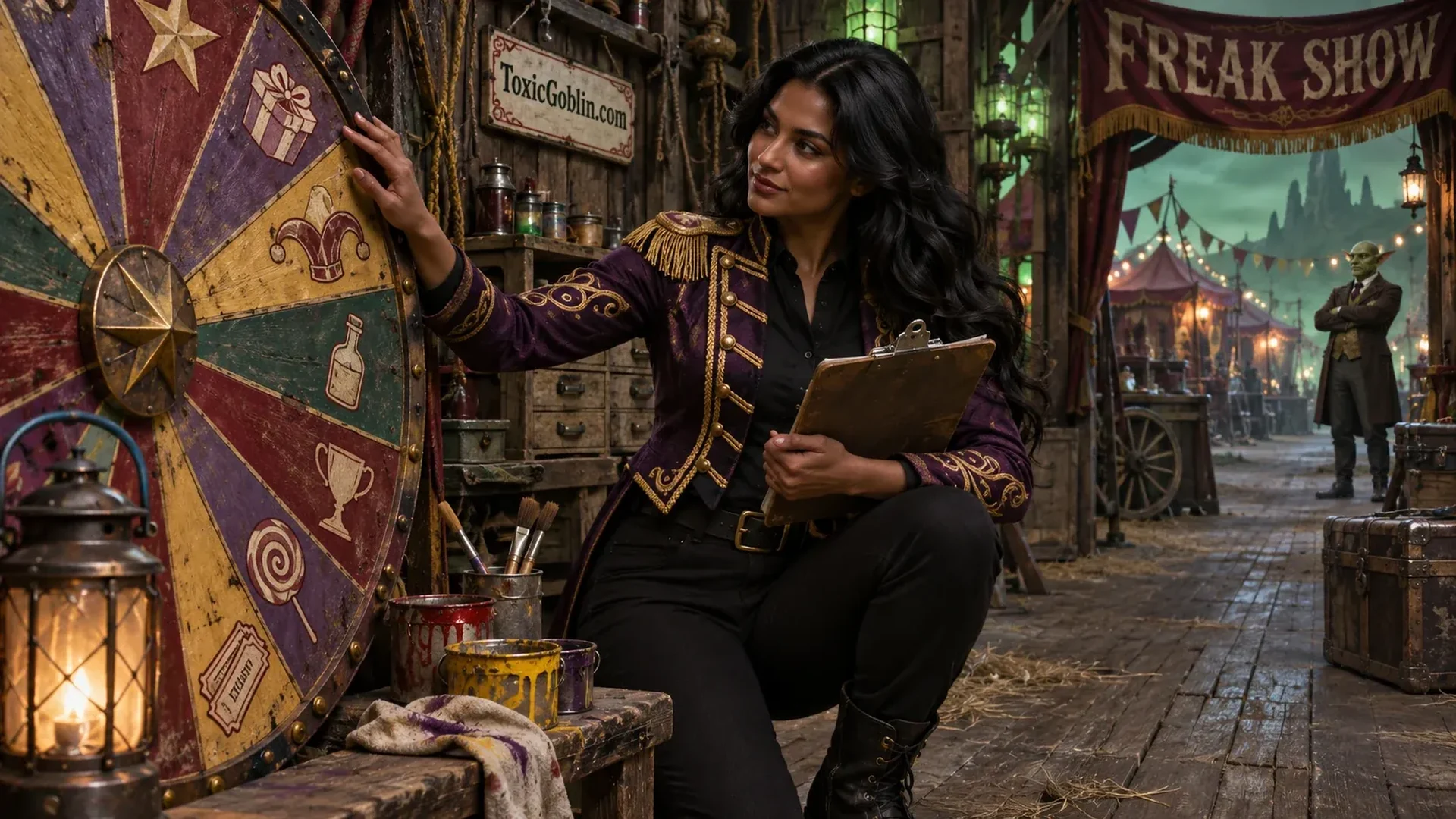
She had rehearsed apologies for equipment faults. None fitted.
Wendy removed the felt pad. The wheel slowed, but the gathered misfortunes remained overhead. Removing the trick had restored the mechanism, not settled what she had accumulated.
A painted wedge she had never seen came into view. It bore no image, only a shallow impression where a hand might rest. Wendy put her palm against it. She saw her next performance: perfect timing, effortless laughter, the Council requesting an encore. It was everything she had expected to keep.
The wheel offered to take that expectation in exchange for another spin.
She nearly accepted at once. A grand sacrifice would restore her place in the evening's story. The audience could applaud her courage instead of remembering her lie. She recognized the bargain's attraction and stepped back.
“No speech,” the messenger said quietly.
“I wasn't going to.”
He looked at her.
Wendy took off her show jacket and hung it over a stool. She asked the audience to move the loose chairs away from the wheel's turning space. Some helped. Others watched with folded arms, and she let them.
Then she explained the remaining choice without promising that it would be kind. She could surrender her certainty of a successful next performance. The wheel would distribute the smaller losses among her future shows instead of releasing them all that evening.
The Council demanded guaranteed recovery by the end of the season.
Wendy told them no such guarantee existed.
It cost her more to say that without a joke than it had cost to confess the pedal.
Act 3
No Applause Required
Act III — No Applause Required
She placed her hand on the blank wedge again. This time she watched the easy future performance fade without trying to replace it with a heroic one.
The wheel moved under her palm.
Above the seats, the dark roof broke apart. Little scenes folded into the painted wedges: a forgotten line, a quiet audience, a night when every joke arrived half a beat late. Wendy felt each settle somewhere ahead of her. She could not tell which would happen first.
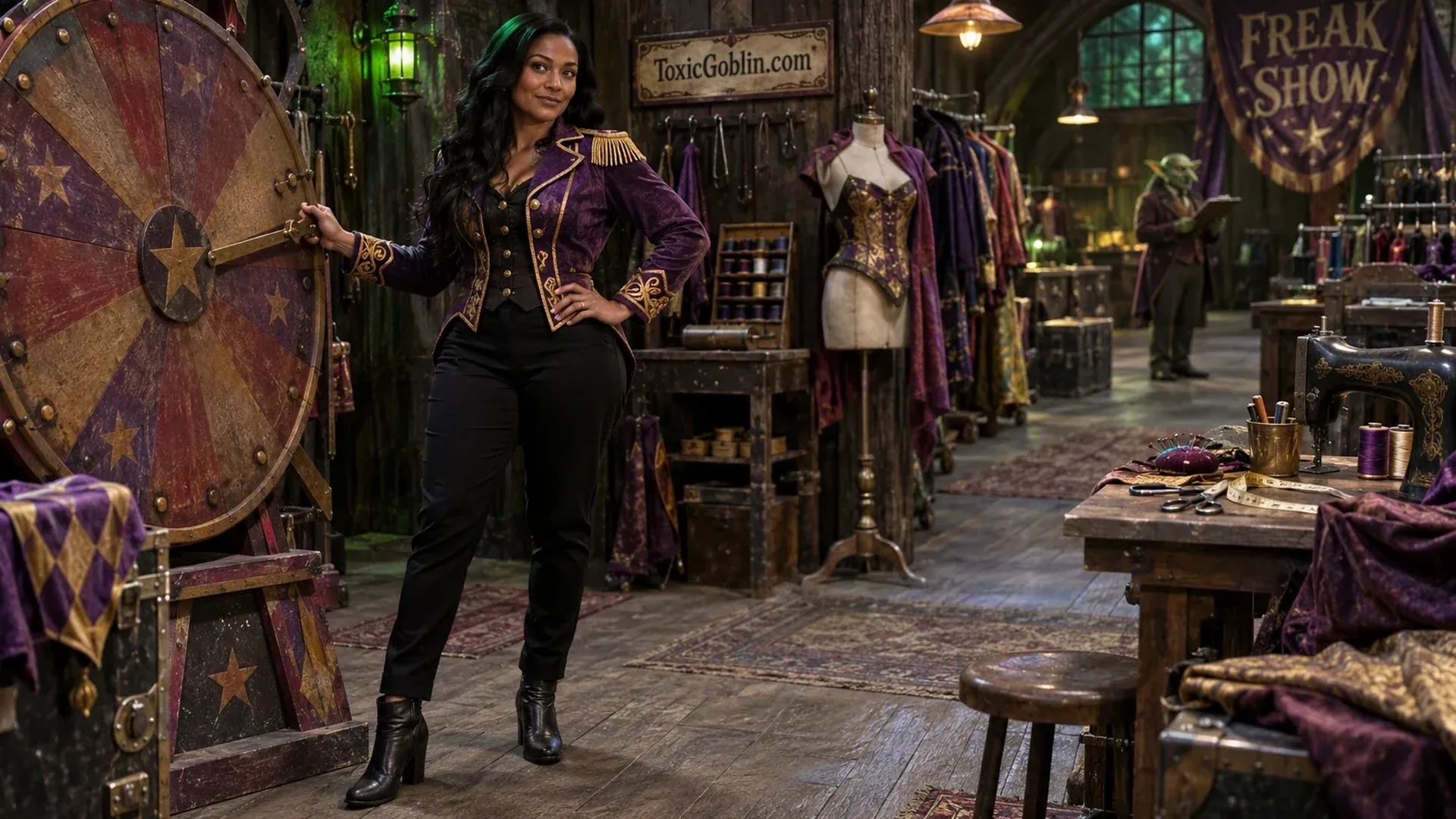
The exit corridor returned.
Nobody applauded. A few visitors left at once. One collected the refund she had promised. Another carried a chair back to its original place. The Council delegation departed without thanking her, though its member retrieved the little bell from the floor.
Wendy sat on the stage until the room was nearly empty.
The messenger remained. He picked up the yellow hat, considered it and put it on. The wooden pear listed to one side.
“I still paid for a turn,” he said.
She looked at the wheel. Without the felt pad, its pointer trembled freely. She could no longer make the evening comfortable for him, or for herself.
“You can have your token back.”
“I know.”
Wendy asked him to name what he was willing to risk. He answered without performance: an afternoon he had set aside for doing nothing. She explained that the wheel might take it and that taking it would not become amusing merely because she found a good line afterward.
He nodded.
From the empty Council box came the sound of someone sweeping. The sweeper paused to watch. Wendy did not fill the silence. She found she could stand inside it without immediately needing to own it.
The messenger grasped the rim.
Wendy's hand twitched toward the place where the pedal had been. She put it behind her back.
The wheel began to turn. Hat, apology, chairs, missed invitation, blank wood. The pointer clicked more softly now, but each sound seemed to travel farther through the room.
Wendy watched the wedges slow, with no sentence ready for the one that would stop.
The cost of a comfortable demonstration
Wendy’s wheel assigns fictional misfortunes rather than ordinary prizes. Her attempt to keep every customer amused raises a sharper problem than faulty equipment: she has replaced their choices with the outcome that makes her performance easiest.